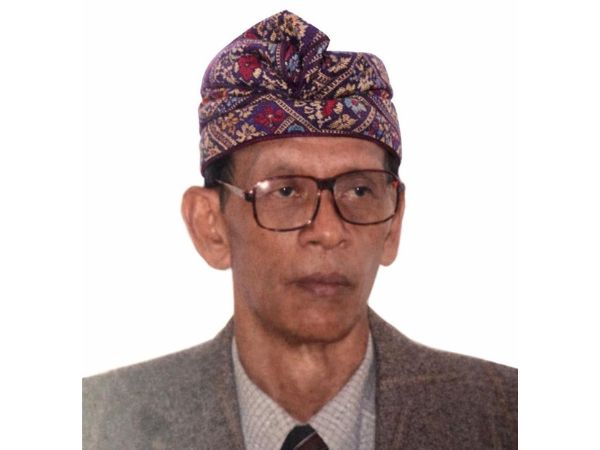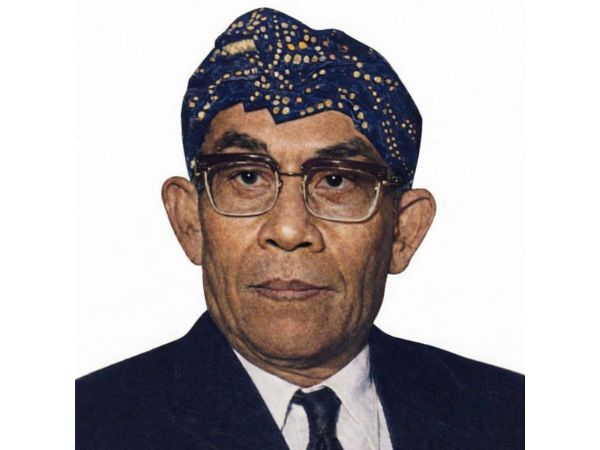
King Anak Agung Panji Tisna
King Anak Agung Panji Tisna was born in 1908 into a noble family descended from the royal lineage of Buleleng. He was the eleventh descendant in the line of Panji Sakti, the founder of the Kingdom of Buleleng. He would later become known not only as the King of Buleleng but also as a writer, thinker, and a significant figure in the history of Bali and Indonesia.
In 1944, following the death of his father, Panji Tisna accepted the responsibility of becoming King of Buleleng. He was also entrusted with leadership within the Paruman Agung, an assembly representing the Balinese kings. His position placed him at the heart of Bali’s history, traditions, and the responsibilities of a Balinese nobleman.
Yet behind this position and responsibility, another profound journey was taking place: a journey of faith.
Panji Tisna began to encounter and study the Christian faith. During this journey, he came into contact with Reverend A. F. Ambessa and other Christian ministers. In 1946, Panji Tisna was baptised as a Christian. This became a defining moment in his life.
His change of faith led him to a difficult decision. In his autobiographical writings, he recorded that in 1947 he asked to step down as King of Buleleng because he had become a Christian and no longer felt it was appropriate for him to rule over the Balinese people.
This decision demonstrated the seriousness with which he regarded his faith and responsibility. He did not hold on to his position simply because of inherited bloodline, honour, or power. Instead, he chose to follow the conviction of his conscience, even though doing so meant relinquishing the position that had been entrusted to him through his lineage.
His decision to leave the throne was not a rejection of Bali, its culture, or its people. Panji Tisna remained an inseparable part of Bali’s history and heritage. His journey was that of a man who carried his background, culture, and responsibilities into a profound search for faith.
From a Christian perspective, Panji Tisna’s decision may be understood as an act of courage and surrender to God. He chose not to make worldly position the centre of his life, but to follow the faith he had come to embrace sincerely.
A king who left the throne—not because he had lost his value or honour but because he chose to live according to the convictions of his conscience.
Panji Tisna’s life demonstrates that faith does not necessarily erase a person’s cultural heritage. History, culture, personal struggle, and faith can all form part of one complete human journey.
The legacy of King Anak Agung Panji Tisna lies not only in his name, title, or position as a king but also in his courage to follow what he believed to be true.
He had once been a king in Buleleng. Yet in his journey of faith, he chose to bow before a King higher than all kings.